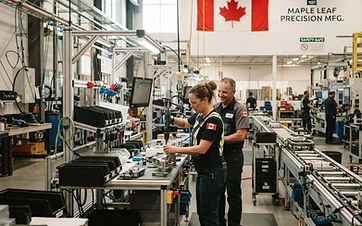

What Non-Dilutive Funding Actually Means for a Startup
Non-dilutive funding does not require issuing ownership shares, but it can still carry repayment obligations, restrictions and reporting requirements. Grants, certain contributions, tax incentives and loans are different tools. Founders should compare their terms rather than treat them as interchangeable free capital.
Start with a technical or commercial milestone: validate a prototype, resolve a technical uncertainty or prepare an eligible product-development project. Identify the work, budget, team and timing before seeking a program. Funding should support a credible plan, not become the reason to invent a project.
NRC IRAP: Innovation Support, Not a General Operating Grant
The National Research Council’s Industrial Research Assistance Program (NRC IRAP) offers advice, connections and, in some cases, funding. Its published minimum requirements include being incorporated, for-profit and operating in Canada, employing up to 500 full-time-equivalent people, and developing and commercializing innovative technology-driven products or services with benefits to Canada.
Meeting those requirements does not guarantee support or funding. NRC assesses the project’s technical aspects, business capacity, commercialization plans and potential outcomes. Its guidance excludes day-to-day operating costs and purely commercial activities. Contact NRC IRAP to discuss fit; do not assume a startup qualifies solely because it writes software.
SR&ED Is a Tax Incentive, Not the Same as IRAP
The Scientific Research and Experimental Development (SR&ED) program provides tax incentives for eligible work linked to eligible expenditures. The CRA describes a deduction against income and an investment tax credit. A claim is generally submitted with the income tax return for the year.
Being innovative in a business sense does not automatically make work eligible for SR&ED. Keep records of technical objectives, uncertainties, experiments, results and associated spending as the work happens. Review eligibility and tax treatment with a qualified adviser. This guide does not estimate a credit rate or promise a refund.
Plan for the Gap Between Spending and Receiving Funding
An award announcement, signed agreement and cash receipt are three different events. For each opportunity, check whether payments are advances, milestone-based or reimbursements, and what proof is required. A tax incentive may arrive on a different timetable from project support.
Illustrative scenario: a startup pays eligible project salaries before receiving a reimbursement. It still needs enough cash to cover payroll in the meantime, plus excluded costs and its own required contribution. Keep unapproved applications out of your committed cash balance and model a delayed-payment scenario.
Build a Funding File Around Your Next Milestone
Founder checklist: incorporation and ownership details; project scope; technical risks; milestones; team profiles; financial statements; a costed work plan; and a record of other assistance. Separate technical development from routine sales and operating expenses where program rules require it.
Maintain a funding ledger linking each expense to its supporting records and claimed assistance. Stacking limits and interactions with tax incentives depend on the applicable rules. Ask the funder and your tax adviser before combining support, and disclose other funding rather than assuming both programs can cover the same costs.
Common Questions About Startup Innovation Funding
Can a pre-revenue startup qualify? Revenue is only one aspect of fit. Read the program’s applicant requirements and demonstrate the financial and management capacity needed to complete the project.
Can IRAP and SR&ED both be relevant? Potentially, but they are separate mechanisms. Their interaction and the treatment of assistance need a program-specific and tax review.
Does a good eligibility score mean the money is secured? No. A score can help prioritize research, but only the funder or tax authority can determine the outcome under its rules.
Use a Funding Pipeline Without Losing Focus on the Product
Prioritize a few opportunities that match your actual milestone, appoint a responsible founder or team member, and track deadlines alongside product commitments. Retain the official guidelines and record unresolved eligibility questions before investing in a full proposal.
GrantList supports discovery, contextual analysis, deadline tracking and AI-assisted first drafts. Founders remain responsible for verifying eligibility, technical evidence and financial assumptions. A useful funding strategy protects focus and makes uncertainty visible rather than relying on an award that has not been approved.